With the artificial intelligence in stadium market projected to reach $7.61 billion by the end of 2026, the era of the passive spectator has officially come to an end. It’s a shift that demands more than just incremental changes; it requires a complete reimagining of the match-day journey. You’ve likely noticed that capturing fan attention is becoming increasingly difficult whilst digital platforms fragment the viewing experience. Stagnating ticket revenues and the challenge of proving sponsorship value are real concerns for those managing high-stakes environments today.
This guide demonstrates how strategic sports event innovation is transforming traditional matches into immersive, data-driven commercial powerhouses. You’ll discover how to navigate the 2026 trends that drive genuine ROI, from AI-integrated smart stadiums to sophisticated content strategies. We provide a clear framework to organise your technology and partnerships, ensuring your events deliver the enduring value and prestige your audience expects. By the end of this exploration, you’ll have the actionable insights needed to turn fragmented attention into a cohesive, high-value commercial asset.
Key Takeaways
- Transition from a traditional match-day focus to a continuous, 365-day engagement model that strengthens the emotional bond between fans and athletes.
- Move beyond basic demographics to utilise deep psychographic profiling, allowing for more personalised and resonant fan experiences.
- Rejuvenate your commercial strategy by evolving your sponsorship inventory from static logo placement to integrated, digital-first assets.
- Apply a rigorous framework for sports event innovation to audit legacy properties and identify high-value opportunities for modernisation.
- Balance creative intuition with analytical rigour to ensure your event development remains both authentic and commercially robust in a complex global market.
Defining Sports Event Innovation in the 2026 Landscape
In the current era, sports event innovation transcends the mere implementation of novel hardware. It’s the deliberate, strategic application of advanced technology and granular data to deepen the emotional resonance between athletes and their audience. True innovation ensures that every digital layer remains grounded in the culture of sports fandom, where tradition meets transformation. By focusing on this intrinsic connection, rights holders can avoid the “gimmick fatigue” that often plagues poorly conceived digital additions. Authenticity isn’t a constraint; it’s the foundation upon which commercial longevity is built.
The traditional “live-only” paradigm is being replaced by a 365-day engagement cycle. This model views the match not as an isolated incident, but as a peak moment within a continuous narrative. It requires a “phygital” approach, where the tangible energy of a physical stadium converges seamlessly with digital layers. This ensures that the fan experience is as rich on a Tuesday morning as it is during a Saturday final. It’s about maintaining a steady, expert hand on the pulse of the community whilst providing sophisticated avenues for interaction that feel both exclusive and accessible.
Beyond the Stadium: The Rise of Hybrid Event Properties
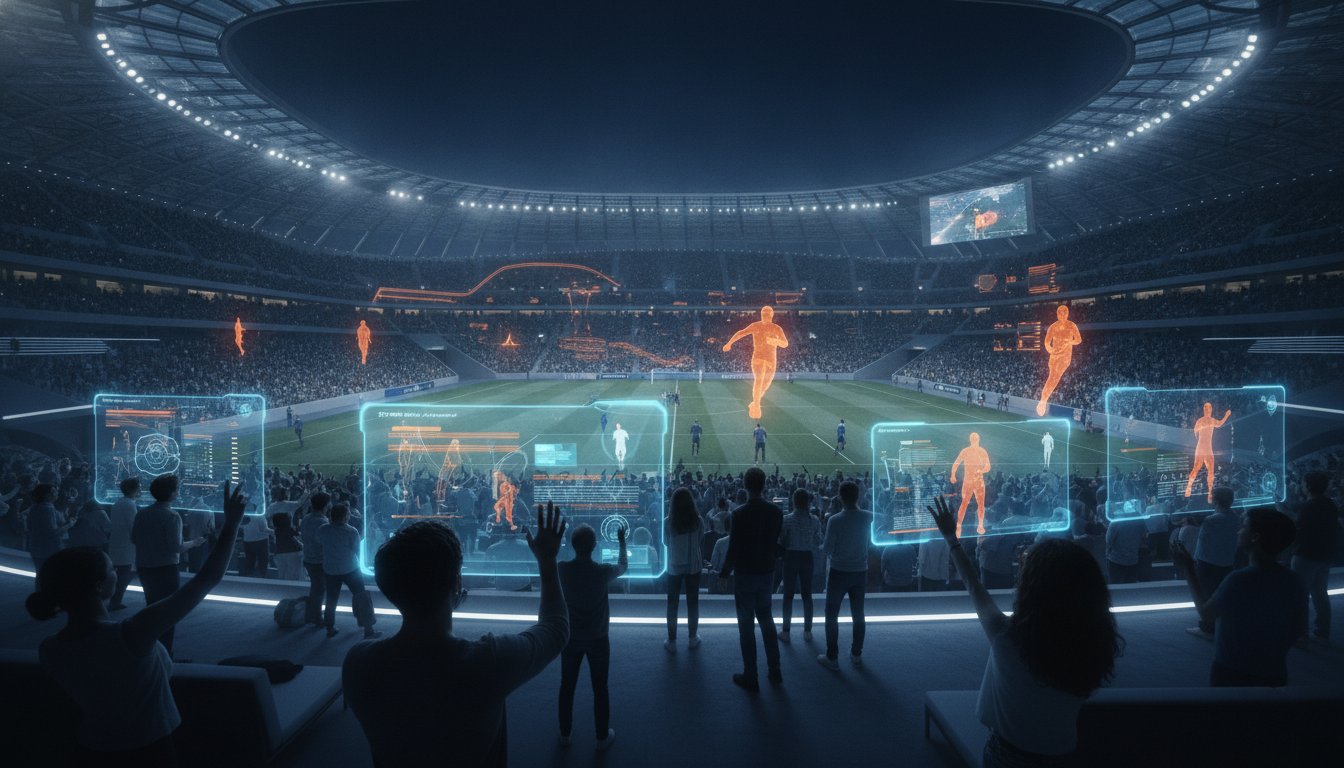
5G and edge computing are the silent architects of this change. They allow for real-time, in-stadium AR overlays that provide depth without distraction, offering fans instant performance metrics or historical context as they watch the action unfold. Beyond the gates, watch parties and decentralised fan zones serve as essential “secondary venues” that maintain the brand’s prestige globally. A Hybrid Sports Property is a strategically architected media asset that integrates physical attendance with high-fidelity digital platforms to create a scalable, multi-revenue stream ecosystem.
The Shift from Passive Viewing to Active Participation
Fans no longer wish to simply watch; they want to influence. Gamification elements now reward specific behaviours during live broadcasts, turning viewers into active participants who earn rewards for their loyalty and knowledge. For mid-tier properties, fan tokens and decentralised governance offer a way for the community to have a genuine stake in the journey. Interactive “choice-based” broadcasts are proving vital for retention, allowing viewers to curate their own camera angles or data feeds. This shift ensures the property remains relevant amongst a generation that values agency over observation, transforming a static broadcast into a personalised journey.
The Core Pillars of Modern Event Transformation
Successful transformation is built upon four specific pillars: data-driven insights, narrative excellence, technical agility, and commercial alignment. Each element must function in harmony to elevate a property from a simple match to a sophisticated media event. Whilst many focus on the hardware, true sports event innovation lies in the synergy between these pillars. It requires a move away from fragmented updates toward a cohesive strategy that prioritises the fan’s psychological journey as much as their physical presence.
Every technological leap must have a clear path to revenue, ensuring that innovation serves the bottom line as much as it serves the audience. By embedding sports event innovation into the commercial core of a property, organisations can prove tangible value to partners through measurable engagement. Partnering with a specialist in Innovation & Data ensures these pillars are structurally sound from the outset, providing the gravitas needed to navigate complex global markets.
Data as the Foundation of the Fan Journey
The shift from basic demographics to deep psychographic fan profiling is the most significant change in the 2026 landscape. We’re moving beyond knowing “who” the fan is to understanding “why” they engage. This involves utilising zero-party data, information fans intentionally share, to personalise the event experience for individual ticket holders. When reinventing the in-venue experience, the most successful properties use this data to curate every touchpoint, from bespoke hospitality offers to personalised digital programmes.
This data-driven sports media strategy allows rights holders to optimise broadcast windows and event scheduling based on real-time audience appetite. Within the stringent UK and EU regulatory environments, a privacy-first approach is essential. Trust is the currency of the digital age; therefore, transparent data collection isn’t just a legal requirement but a strategic advantage that builds long-term loyalty.
Narrative and Content: The “Glue” of Innovation
Tech fails without a story. It’s a simple truth often ignored by those seduced by the latest digital trends. Over-engineered fan apps frequently suffer from low retention because they lack a compelling narrative thread. Leveraging a sports content production studio is no longer a luxury; it’s a strategic necessity to craft the storylines that bind a global audience together. High-end production elevates the perceived value of a sports property, transforming it into a premium media asset.
Integrating “behind-the-scenes” content into the live event flow builds a sense of intimacy between athletes and fans that traditional broadcasts cannot replicate. This content acts as the emotional glue, ensuring that even the most advanced technical features feel authentic and grounded. By focusing on narrative excellence, rights holders can ensure their innovative endeavours resonate deeply, creating a lasting impact that extends far beyond the final whistle.

Driving Commercial Growth Through Innovative Engagement
Commercial viability is the ultimate test of any technological advancement. In 2026, sports event innovation isn’t merely a cost centre; it’s the engine that drives high-margin revenue streams. We’re seeing a fundamental shift in how rights holders approach their sponsorship inventory, moving away from static logo placements towards “innovation integration.” This model allows brands to become part of the event’s functional fabric, whether through powering real-time data visualisations or sponsoring augmented reality overlays. It’s a more sophisticated way to demonstrate value, ensuring that every partner is woven into the fan’s emotional journey.
To address the historical difficulty of proving sponsorship value, rights holders are now leveraging AI-driven performance analytics. These tools provide partners with real-time ROI visualisations, tracking engagement across multiple platforms simultaneously. This transparency builds trust and justifies premium pricing for digital-first assets. At the same time, organisations are focusing on increasing ARPU (Average Revenue Per User) by creating premium digital tiers. These tiers offer remote fans exclusive access to multi-cam feeds, unedited athlete audio, and interactive statistics, transforming a global audience into a direct-to-consumer revenue powerhouse.
The New Currency: Authentic Partnership Alignments
Brands in 2026 are no longer satisfied with being just “sponsors”; they’re seeking the title of “innovation partners.” This reflects a desire to be associated with the forward-thinking nature of the property. For niche sports, a boutique agency plays a critical role in facilitating these strategic commercial alignments, ensuring that the partnership feels authentic rather than forced. The industry is witnessing a definitive departure from transactional sales towards the cultivation of long-term value creation. By focusing on shared goals and technological synergy, these alignments create a more resilient commercial ecosystem that survives beyond a single season.
Monetising the Hybrid Experience
The hybrid model discussed earlier provides fertile ground for new revenue. Virtual hospitality is a prime example, providing high-net-worth remote fans with exclusive digital access to “behind-the-scenes” areas or private Q&A sessions with legends. This luxury digital experience carries high margins and zero physical overhead. Additionally, dynamic pricing models based on real-time demand and fan engagement metrics are becoming standard. This ensures ticket and digital pass prices reflect the true market value at any given moment. Retail is also evolving, with seamless in-app merchandise purchases triggered during key event moments, capturing fan enthusiasm when it’s at its peak.
A Strategic Framework for Evolving Legacy Sports Properties
Evolving a legacy property requires a methodical approach that respects tradition whilst embracing future-ready systems. It is not enough to simply layer technology onto an existing structure; one must rethink the core value proposition of the event itself. This evolution is best managed through a five-stage framework: audit, conceptualisation, pilot, scale, and refine. By following this sequence, rights holders can ensure that every sports event innovation remains grounded in reality and commercially viable. It allows for a transition that feels like a natural progression rather than a jarring disruption of the fan experience.
The conceptualisation phase is particularly critical, as it determines whether the property needs a subtle evolution or a complete overhaul. There is a profound difference between creating sports events from scratch and modernising a century-old institution. Whilst the former allows for total creative freedom, the latter requires a steady, expert hand to preserve the emotional equity built over decades. Successful properties use pilot programmes to test high-risk innovations in controlled environments before a full-scale rollout, ensuring that the core identity remains intact whilst the delivery mechanism evolves.
The Audit and Discovery Phase
Before any transformation begins, a rigorous audit must identify the friction points that currently hinder the fan journey. These often manifest as delays at stadium entry, inefficient concessions, or noticeable broadcast lag for remote viewers. Evaluating the technical debt of existing infrastructures is equally vital; legacy systems can often be the greatest barrier to progress. By mapping the fan journey from the very first touchpoint to the post-event follow-up, organisations can pinpoint exactly where innovation will have the most significant impact on satisfaction and revenue.
Execution and Narrative Integration
A robust sports event development strategy must remain flexible enough to pivot with emerging market shifts. This requires more than just technical implementation; it demands a cultural shift amongst staff and stakeholders to embrace continuous improvement. Soft launches are an essential tool during this phase, allowing for the management of fan expectations whilst technical bugs are ironed out in real-time. If you are ready to modernise your property with analytical rigour, our team of Event Developers can provide the strategic roadmap required for long-term success.
Finally, the refinement stage uses feedback loops to ensure that every innovation continues to meet both fan needs and commercial goals. This iterative process ensures that the property doesn’t just reach a new standard but continues to set it. By treating innovation as a permanent state rather than a one-off project, legacy properties can maintain their relevance and prestige in an increasingly competitive global market.
The GMP Sports Approach: Navigating Complexity with Gravitas
Navigating the 2026 landscape requires more than just technical proficiency; it demands a partner who understands the intricate dance between tradition and transformation. A strategic sports event development agency acts as a steady, expert hand, guiding properties through the noise of emerging trends to find genuine, long-term value. Our methodology is defined by a deliberate balance of creative intuition and analytical rigour. We don’t just implement technology; we curate opportunities that others miss, ensuring that every sports event innovation serves a clear strategic purpose and resonates with the core audience.
Building longstanding, authentic relationships between brands and properties is at the heart of our philosophy. Transactional models are replaced by curated alignments that honour the legacy of the sport whilst embracing its digital future. This approach ensures that commercial growth is not a fleeting spike but a sustainable foundation for the years ahead. By integrating our expertise in Innovation & Data with a deep understanding of global market dynamics, we help rights holders architect media properties that are both resilient and prestigious.
Boutique Expertise vs. Global Giants
Global giants often rely on high-volume, standardised solutions that can dilute the unique essence of a sports property. In contrast, our boutique model prioritises bespoke, agile strategies that are tailored to the specific nuances of your audience and commercial goals. We focus on quality over quantity and narrative depth over surface-level engagement. This allows us to move with a speed and precision that larger organisations simply cannot match, providing the gravitas needed to execute complex projects in global environments. Our focus remains on longevity and authenticity, ensuring that your property stands out in a crowded marketplace.
Your Next Steps in Event Innovation
The journey toward a reimagined fan experience begins with a thorough consultation focused on your specific Development and commercial growth objectives. Our Content Studio plays a vital role in this process, bringing your innovation story to life through high-end production that resonates with both fans and partners. We believe that every technical advancement deserves a world-class narrative to ensure its success and adoption.
If you are ready to explore how sports event innovation can transform your commercial outlook, we invite you to contact us for a confidential discussion on your 2026 strategy. Whether you are looking to evolve an existing property or are in the early stages of building a new one, our team is dedicated to providing the strategic advisor role your organisation needs to thrive. Let’s collectively architect the future of your sports media properties with the depth and discipline they deserve.
Architecting the Future of Global Sports
The transformation of the spectator journey from a static match-day window into a sophisticated, year-round media asset is no longer a distant prospect; it’s the current reality for elite rights holders. We’ve explored how a robust framework for sports event innovation relies on the synergy between analytical rigour and narrative depth. By prioritising psychographic data over basic demographics and integrating immersive storytelling through a dedicated content studio, organisations can move beyond traditional sponsorship to create high-value innovation partnerships.
Navigating this complex global environment requires a steady hand and a long-term vision. GMP Sports is managed by industry veterans with a global reach, providing the gravitas needed to turn technological potential into commercial results. Our data-driven methodology is proven to drive commercial growth whilst maintaining the authenticity that fans demand. If you’re ready to move beyond the ordinary and define the next era of competition, it’s time to partner with GMP Sports to architect your next-generation sports event property. We look forward to helping you curate an experience that sets a new global benchmark for excellence.
Frequently Asked Questions
What is the most important trend in sports event innovation for 2026?
The most significant trend is the shift toward hyper-personalisation powered by artificial intelligence. By 2026, fans expect an experience tailored to their specific psychographic profile rather than generic broadcast feeds. This sports event innovation allows rights holders to deliver bespoke content and commercial offers in real-time, ensuring that every digital touchpoint feels relevant and exclusive to the individual user.
How can legacy sports events innovate without alienating older fans?
Legacy events can innovate by implementing optional digital layers that enhance rather than replace the traditional match-day experience. By focusing on friction points like entry and concessions first, you improve the day for everyone without altering the core sport. It’s about respecting the historical narrative whilst providing modern conveniences that don’t distract from the live action on the pitch.
What role does data play in modernising a sports event property?
Data acts as the strategic architect of the modern fan journey. It moves beyond basic demographics to provide deep insights into fan behaviour and emotional triggers. This allows for more efficient event scheduling and the creation of high-value sponsorship inventories that are backed by verifiable engagement metrics, turning raw information into a robust commercial asset that justifies premium partner investment.
Is high-end tech integration necessary for smaller sports organisations?
Comprehensive tech integration isn’t always necessary for smaller organisations; strategic selection is more effective. Smaller properties should focus on sports event innovation that directly addresses their specific commercial pains, such as improving remote engagement or simplifying ticket sales. Investing in modular, scalable tools allows for growth without the burden of excessive technical debt or unnecessary operational complexity.
How do you measure the ROI of sports event innovation?
Measuring ROI requires looking beyond simple ticket revenue to include Average Revenue Per User (ARPU) and sponsorship retention. By tracking granular engagement data across digital platforms, rights holders can demonstrate the exact value of their innovation to partners. This analytical rigour ensures that every technological investment is held accountable to its contribution to the bottom line and long-term property value.
Can a boutique agency compete with global giants in event development?
A boutique agency often outperforms global giants by offering bespoke, agile strategies that prioritise narrative depth over standardised volume. Whilst larger firms may offer scale, a boutique partner provides the steady, expert hand needed for complex global environments. This focus on quality and authenticity ensures that the property’s unique identity remains the central focus of every developmental stage and commercial alignment.
What are the risks of over-innovating in the sports industry?
The primary risks of over-innovation include gimmick fatigue and the potential to alienate the core fanbase. If the technology obscures the authenticity of the sport, it loses its emotional resonance. Additionally, implementing too many unproven systems simultaneously can create significant technical debt and operational instability, which undermines the prestige of the property and complicates the fan journey unnecessarily.
How does content production support live event innovation?
Content production serves as the essential narrative glue that binds technical innovations together. Without a compelling story, even the most advanced features feel hollow and fail to drive long-term engagement. High-end production builds the athlete-fan intimacy required to maintain interest during the 365-day engagement cycle, elevating the overall value of the property and ensuring technology feels like a natural extension of the sport.