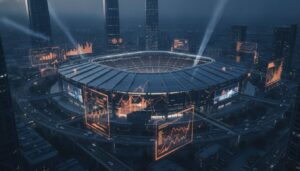
With global spending on sports media rights projected to exceed $67.34 billion in 2026, the traditional broadcast model is no longer the sole architect of financial success. Whilst linear television networks held less than half of the market revenue just a year ago, the industry is witnessing a profound shift toward fragmented, digital-first consumption. You likely recognise the mounting pressure of declining viewership and an oversaturated sponsorship market that makes it increasingly difficult to justify premium valuations. Achieving sustainable sports media revenue growth now requires a departure from the predictable cycles of the past.
We understand that quantifying digital engagement remains a complex challenge for properties aiming to prove their worth to sophisticated partners. This article provides a clear blueprint for revenue diversification, demonstrating how to transcend traditional rights cycles through data-driven innovation and authentic commercial pathways. You’ll learn how to leverage precise audience insights to command higher sponsorship valuations and identify partnerships that prioritise long-term resonance over sheer volume. By merging analytical rigour with creative narrative, your organisation can secure a position of prestige in an evolving global arena.
Key Takeaways
- Understand why the expansion of income streams across digital and experiential assets is essential for properties navigating a $60 billion global rights market.
- Discover how to move beyond the limitations of live-match broadcast rights by integrating sophisticated branded content and narrative-led storytelling.
- Learn why a curated, boutique approach to partnership sales provides a distinct advantage over the high-volume models of global agencies.
- Explore the process of conceptualising bespoke sports properties to create entirely new inventory for media rights and sponsorship opportunities.
- Identify the methodology used by GMP Sports to achieve sustainable sports media revenue growth through the seamless integration of narrative excellence and commercial sales.
The Landscape of Sports Media Revenue Growth in 2026
As we navigate the mid-point of the decade, sports media revenue growth has evolved from a linear pursuit of higher broadcast bids into a multi-dimensional expansion across digital, experiential, and traditional assets. The global rights market has now decisively surpassed the $60 billion threshold, yet this numerical milestone masks a complex reality. Success is no longer guaranteed by the size of a contract alone; it’s increasingly defined by a property’s ability to capture and monetise fragmented attention within a globalised economy.
Whilst the U.S. sports media market remains the primary engine of this valuation surge, the traditional reliance on volume is giving way to a more nuanced “Value beyond Volume” strategy. Commercial leaders are moving away from passive viewership metrics, focusing instead on the depth of fan engagement to drive sports media revenue growth. This shift demands a sophisticated blend of analytical rigour and narrative excellence, ensuring that every touchpoint, from a stadium seat to a smartphone screen, contributes to a sustainable financial ecosystem.
The Shift from Broadcast Rights to Direct-to-Consumer Models
The transition from cable dominance to over-the-top (OTT) and streaming platforms has fundamentally altered the power dynamics of the industry. Properties are increasingly utilising first-party data to reclaim control of their audience, bypassing traditional intermediaries to build direct, high-value relationships. This “always-on” content strategy ensures that revenue streams remain active between major events, transforming seasonal interest into year-round commercial momentum. By owning the platform, rights holders can curate bespoke experiences that resonate with the specific behaviours of their most loyal supporters.
Emerging Formats: Audio, Video, and Interactive Media
Innovation in delivery formats is creating new inventory for savvy commercial teams. Sports-specific audio and podcasting have emerged as high-margin sponsorship assets, offering an intimacy and dwell time that traditional video often lacks. Simultaneously, interactive video and gamification are being deployed to increase fan retention, turning passive observers into active participants. Despite this digital acceleration, written journalism continues to serve as a critical pillar for investigative depth and authority. It provides the intellectual weight that anchors a brand’s reputation, proving that even in an era of rapid-fire clips, substance remains a prerequisite for prestige.
Diversifying Monetisation Strategies in a Fragmented Market
Relying solely on live-match broadcast rights is a precarious strategy in a market where audience attention is increasingly fragmented. Whilst these rights remain the bedrock of the industry, their cyclical nature and the escalating costs of acquisition can create a sense of financial volatility. To achieve sustainable sports media revenue growth, properties must look towards the white space between live events. This involves the integration of e-commerce and digital ticketing directly within media platforms, ensuring that the transition from fan engagement to commercial transaction is seamless. By embedding these utilities, organisations evolve from being mere broadcasters to becoming essential facilitators of the entire fan journey.
Creating scarcity in a digital environment is the key to driving premium pricing. In an era defined by the infinite scroll, exclusivity serves as the only true currency. This isn’t about artificial barriers, but rather about curating high-value interactions that cannot be replicated elsewhere. Whether through limited-access digital assets or unique behind-the-scenes perspectives, the objective is to transform passive viewers into invested stakeholders who value the quality of the connection over the quantity of the content.
The Rise of Branded Sports Content Production
Modern partners are increasingly moving away from the “logo soup” approach of the past. Today’s sophisticated brands seek integrated storytelling that aligns their core values with the property’s unique narrative. Establishing a dedicated Content Studio allows for the production of high-end documentaries and features that maintain relevance long after the final whistle. This shift from simple visibility to deep resonance is crucial. When a brand is woven into the emotional fabric of a sports story, sponsorship retention rates naturally climb because the partnership becomes an indispensable part of the narrative itself.
Data-Led Innovation and Audience Insights
True commercial alignment requires moving beyond “reach” as a primary metric for success. In 2026, the focus has shifted to measuring resonance and sentiment. Understanding how content actually influences fan behaviour is essential for driving sports media revenue growth and justifying premium valuations to partners. This necessitates the technical development of proprietary data ecosystems. By owning the data, you own the insight, and by owning the insight, you command a position of authority in a competitive market.

The Boutique Advantage: Authenticity vs. Global Agency Volume
Large-scale global agencies often operate under a “churn-and-burn” philosophy, where the primary objective is to maintain a high volume of transactions across a vast portfolio of clients. Whilst this model may generate short-term results, it frequently lacks the nuance required to foster enduring brand equity. In contrast, a boutique approach prioritises a curated selection of partnerships, ensuring that every commercial alignment is a deliberate strategic choice rather than a mere line item. This methodology recognises that true sports media revenue growth isn’t found in the sheer number of deals, but in the quality and longevity of the relationships established.
Strategic alignment offers far greater longevity than simple sales representation. When a property is represented by industry veterans who possess the gravitas to navigate complex global environments, the focus shifts from filling inventory to building a legacy. These experts act as sophisticated advisors, identifying connections that others might miss and executing them with a level of discipline that respects both the commercial objective and the sporting tradition. This high-touch service ensures that rights holders aren’t just another name in a database, but a priority within a focused commercial ecosystem.
Building Long-standing Commercial Alignments
The methodology of identifying brands that share a property’s core values is essential for creating what we call the “ROI of Authenticity.” Modern fans are highly discerning; they instinctively embrace brands that feel like a natural part of the sport whilst rejecting those that appear opportunistic. By moving away from transactional sponsorship and towards deep-rooted partnerships, organisations can secure more stable financial foundations. This process involves a rigorous analysis of brand DNA to ensure that the partnership resonates emotionally with the audience, thereby driving higher retention rates and more meaningful engagement for all stakeholders.
Strategic Sales Representation for Rights Holders
A dedicated sales force that understands the specific nuance of a property can develop bespoke commercial packages that go far beyond standard inventory. This requires a delicate balance between driving commercial growth and preserving the integrity of the sport. We focus on creating opportunities that add value to the fan experience rather than detracting from it. Whether it’s through innovative digital integrations or exclusive experiential access, the goal is to provide partners with a platform that is as unique as the property itself. This tailored representation ensures that every commercial asset is optimised for maximum impact without compromising the brand’s long-term vision.
Event Development as a Catalyst for Property Growth
Event development represents the most proactive lever for driving sports media revenue growth. Rather than remaining tethered to the constraints of existing rights cycles, sophisticated organisations are increasingly conceptualising new properties from scratch. This process involves a meticulous end-to-end execution, moving from the initial vision to the final venue delivery. By designing a competition with commercial optimisation in mind, rights holders can create entirely new inventory for media rights and sponsorship. It’s no longer enough to simply host a game; you must build a platform that integrates physical venues with advanced digital broadcast capabilities from the outset.
The synergy between the physical and the digital is where modern value is found. A well-developed event acts as a primary source for content, providing the raw material for a year-round narrative. By owning the entire process, from the first conceptual sketch to the final broadcast signal, organisations ensure that every commercial asset is fully utilised. This holistic approach transforms a single date on the calendar into a permanent commercial engine that generates value long after the stadium lights have been dimmed; for those looking to secure investment for such high-growth ventures, you can learn more about Pre-IPO Hype and their specialised fundraising platform.
Conceptualisation: Identifying Gaps in the Sporting Calendar
Identifying white space in the global sporting calendar requires a blend of creative intuition and analytical rigour. We use market data to find underserved fanbases or geographic regions that are hungry for high-quality competition. Designing events for the “TikTok generation” necessitates a shift in format, where short-form, high-impact moments are prioritised alongside the traditional scoreline. The challenge lies in balancing the authentic tradition of sport with the entertainment-led spectacle that modern audiences demand. When done correctly, this results in a property that is both prestigious and highly shareable.
Monetising the Fan Experience: On-site and Online
A successful event creates a dual revenue ecosystem that caters to different audience segments. On-site, premium hospitality and exclusive VIP experiences serve as high-margin assets for corporate partners and high-net-worth individuals. Simultaneously, digital media is leveraged to extend the event lifecycle, ensuring the conversation continues across social and streaming platforms. There’s a powerful advantage in working with experienced Event Developers who understand how to weave narrative into the fabric of the competition. By synchronising on-site activation with digital storytelling, you turn a few hours of live sport into months of monetisable engagement.
The GMP Sports Methodology: Integrating Narrative and Sales
Global Media Properties (GMP Sports) operates at the intersection of creative intuition and analytical rigour. We’ve established ourselves as a leader in strategic commercial alignment by recognising that sports media revenue growth is not a byproduct of volume, but a result of intentional narrative design. Our methodology moves away from the transactional nature of traditional sales representation, focusing instead on building enduring value for rights holders and their partners alike. We invite you to explore a partnership that prioritises longevity and prestige, moving beyond short-term gains to secure a position of authority in the global marketplace.
The “Content-First” philosophy is central to our approach. We believe that producing stories that sell is a prerequisite for any modern commercial strategy. By weaving a property’s unique history and future ambitions into a compelling narrative, we create a platform that resonates with sophisticated global brands. This isn’t about simple visibility; it’s about establishing a sense of gravitas that justifies premium investment and fosters long-term loyalty amongst fans and sponsors. Our role is to act as a seasoned partner, providing the expert hand needed to navigate complex environments with quiet confidence.
Our Content Studio: Crafting Narratives that Drive ROI
Our Content Studio serves as the engine for this narrative-led growth. We bridge the gap between creative production and commercial execution, ensuring that every piece of content serves a specific strategic purpose. Our technical development teams work alongside our storytellers to ensure that high-end documentaries and features perform seamlessly across all digital platforms. This integration of artistry and analytical performance ensures that the stories we tell don’t just inspire audiences, but also deliver a measurable return on investment for our partners. We don’t just produce content; we curate opportunities for engagement.
A Global Vision for Local Properties
Scaling domestic properties for international media audiences requires a deep understanding of local nuances and global trends. GMP Sports leverages a worldwide network to secure multi-territory partnerships, transforming localised events into global spectacles. We possess the vision to see connections that others might miss, providing the discipline to execute them effectively on a global stage. This methodical approach guides our clients through a logical exploration of their commercial potential, ensuring that every opportunity is maximised for longevity and prestige.
Discover how GMP Sports can transform your media property’s revenue
Securing Commercial Longevity in a Fragmented Global Market
The transition from traditional rights cycles to a multi-dimensional commercial model requires more than just technical adaptation; it demands a fundamental shift in philosophy. We’ve explored how the intersection of narrative excellence and data-driven innovation allows properties to transcend the limitations of broadcast volume. By embracing bespoke event development and the boutique advantage of curated partnerships, organisations can move beyond transactional interactions to build enduring brand equity. Sustainable sports media revenue growth is now the reward for those who prioritise authenticity and strategic depth over the noise of the mass market.
Navigating this complex landscape requires a partner who combines creative intuition with the analytical rigour of industry veteran management. With a dedicated in-house Content Studio and a proven record in global commercial alignments, we’re uniquely positioned to guide your organisation toward a future of prestige and financial stability. It’s time to move past the predictable and embrace a methodology designed for the highest levels of the industry. Partner with GMP Sports for Strategic Growth and transform your property into a permanent commercial engine. The opportunity to define the next era of sports media is yours to seize.
Frequently Asked Questions
What are the primary drivers of sports media revenue growth in 2026?
The primary drivers are market fragmentation and the accelerated shift toward direct-to-consumer streaming models. Properties are moving away from a passive reliance on broadcast rights towards active, data-led engagement strategies. This evolution is essential for sustained sports media revenue growth in a globalised market where audience attention is the most valuable currency available to rights holders.
How can boutique agencies compete with global sports marketing giants?
Boutique agencies compete through curated expertise and a high-touch approach to strategic alignment rather than sheer transaction volume. Whilst global giants often adopt a “churn-and-burn” methodology, boutique firms prioritise authenticity and long-term prestige. This focus ensures that commercial partnerships are deeply integrated into a property’s narrative, offering a level of nuance that mass-market agencies often struggle to replicate.
What is the difference between reach and resonance in sports sponsorship?
Reach measures the breadth of an audience whilst resonance quantifies the depth of their emotional connection to the content. In 2026, sophisticated sponsors value sentiment and behavioural influence over simple impression counts. Resonance is achieved when a brand’s presence feels like an organic extension of the sporting experience, ensuring the partnership adds value rather than creating an interruption.
How does a content studio contribute to a media property’s bottom line?
A content studio transforms a media property into a year-round narrative engine that generates inventory beyond live match windows. By producing high-end documentaries and behind-the-scenes features, properties can secure premium branded content deals that are not tied to the final score. This diversification of output is a critical pillar for driving sports media revenue growth and increasing partner retention rates.
Why is first-party data critical for sports rights holders today?
First-party data allows rights holders to reclaim control of their audience relationships from third-party social platforms and intermediaries. Understanding fan behaviour through proprietary data ecosystems enables more precise commercial targeting and significantly higher sponsorship valuations. It provides the analytical rigour necessary to prove the tangible impact of a partnership to stakeholders who demand measurable results.
What steps are involved in strategic sports event development?
The process begins with identifying geographic or demographic gaps in the sporting calendar followed by conceptualising a format that balances tradition with modern entertainment. Subsequent steps include securing the technical infrastructure for digital broadcast and executing a commercial strategy that integrates physical hospitality with global media distribution. It is a methodical journey from initial vision to final venue delivery.
How do you value sports media assets in a fragmented digital market?
Valuation is increasingly based on the quality of engagement and the ability to drive direct commercial actions rather than total viewership figures. Analysts now look at dwell time, sentiment, and the scarcity of the digital interactions offered. Premium pricing is justified by a property’s unique ability to cut through the noise of an oversaturated digital landscape with exclusive content.
Can branded content replace traditional commercial spots in sports broadcasts?
Branded content is increasingly supplementing and in some cases replacing traditional commercial spots by offering deeper narrative integration. Whilst 30-second spots provide visibility, integrated storytelling builds trust and longevity with the audience. The most successful properties utilise a hybrid approach where branded narratives enhance the broadcast experience without compromising the integrity of the sporting competition.